Skip to content

Desert Plants Chosen for the Places They Will Grow

Desert planting

Selecting desert plants for the specific spot they will occupy: exposure and microclimate, soil and drainage, mature size, water needs, and the color and texture the design calls for through the year.

Carries the character of the landscape. Plant choice, not rock, is what keeps a xeriscape from looking bare.

Match the plant to the light the spot actually gets

Exposure is read at the planting spot, not across the yard as a whole.

More detail about Match the plant to the light the spot actually gets

Exposure is read at the planting spot, not across the yard as a whole. A bed against a west wall, an open area in full sun, and the north side of the house are three different growing conditions, and the plant list is different for each.

Walls, paving and canopy make their own climate

Built surfaces make small pockets with their own conditions, and they are often the difference between a plant that settles in and one that never does.

More detail about Walls, paving and canopy make their own climate

Built surfaces change the conditions around them. Masonry and paving store heat and release it into the evening, a wide overhang keeps rain off the ground beneath it, and a tree canopy creates the filtered light an understory needs.

These pockets are small, and they are often the difference between a plant that settles in and one that never does.

Drainage decides more than soil type

Most desert plants tolerate poor soil far better than they tolerate standing water.

More detail about Drainage decides more than soil type

Most desert plants tolerate poor soil far better than they tolerate standing water. How fast water moves through a spot, and whether it collects there after a storm, decides whether a plant that should thrive quietly rots instead.

Where drainage is poor, the answer is usually to change the grade or move the plant rather than to fight the soil.

Choose the plant for the size it will be

Mature size is the specification ignored most often, and spacing for it means a bed looks open at first.

More detail about Choose the plant for the size it will be

Mature size is the specification ignored most often. A plant chosen for the gap it fills today is the plant that later blocks a window, crowds a path, or gets cut back into a shape it was never going to hold.

Spacing for maturity means a bed looks open at first. That is the plan working, not the plan failing.

Group plants by what they drink

Plants with similar water needs are grouped so a zone can be run for them — and lower-water is not waterless.

More detail about Group plants by what they drink

Plants with similar water needs are grouped so a zone can be run for them. Mixing a plant that wants regular water with one that wants very little forces a schedule that is wrong for both.

Lower-water is not waterless. Drought-tolerant planting still needs irrigation, and it needs noticeably more of it while it is rooting than it will need later.

Color through the year, not only in spring

Flowering plants carry the season and structural plants hold the composition when the bloom cycles off.

More detail about Color through the year, not only in spring

Flowering shrubs and accents carry seasonal color, and structural plants hold the composition when the bloom cycles off. Selecting for both is what keeps a bed from looking spent for most of the year.

Establishment is when a new landscape is won or lost

New planting needs more water while it roots than it will ever need again, and for longer than most people expect.

More detail about Establishment is when a new landscape is won or lost

New planting needs more water while it roots than it will ever need again, and the period runs longer than most people expect. It varies with plant size, the season it went in, and the soil it went into.

This is the stage where a new desert landscape is most often lost, so the watering for it is set out explicitly at the walkthrough rather than left to guesswork.

What the maintenance actually looks like

Low-maintenance, not no-maintenance: seasonal pruning, occasional weeding, drip checks, and refreshing ground material over time.

More detail about What the maintenance actually looks like

Low-maintenance, not no-maintenance. Expect seasonal pruning, occasional weeding, checking the drip system, and refreshing ground material over time.

It is considerably less work than a lawn, and it is not zero. A desert landscape that is never touched stops looking designed.

Concept directions

Conceptual design demonstration — not client work. Each one shows a design decision rather than a finished project.

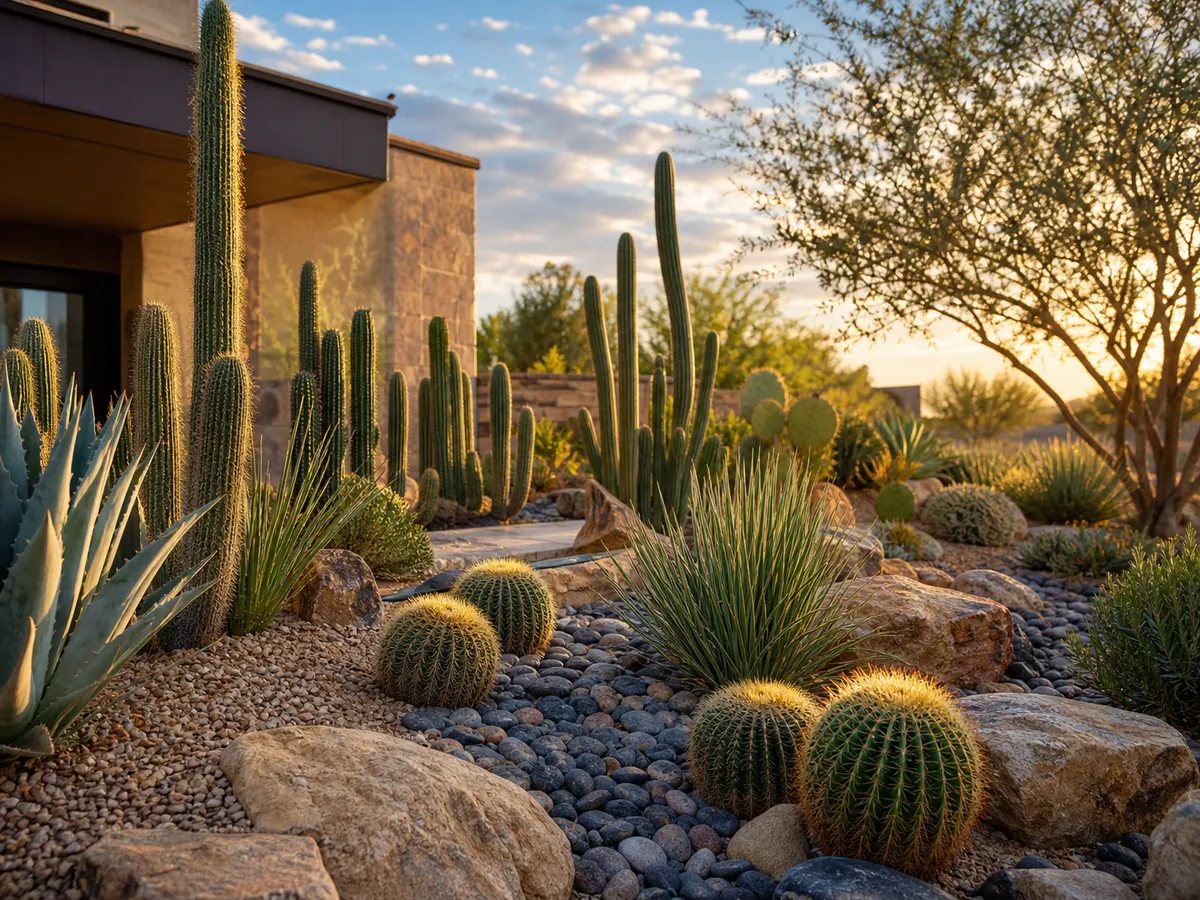
Concept of a cactus and succulent garden with decorative rock
A sculptural planting direction built on form and repetition.Plants are spaced for mature size, so the composition opens up as it grows instead of needing to be thinned.Conceptual design demonstration — not client work
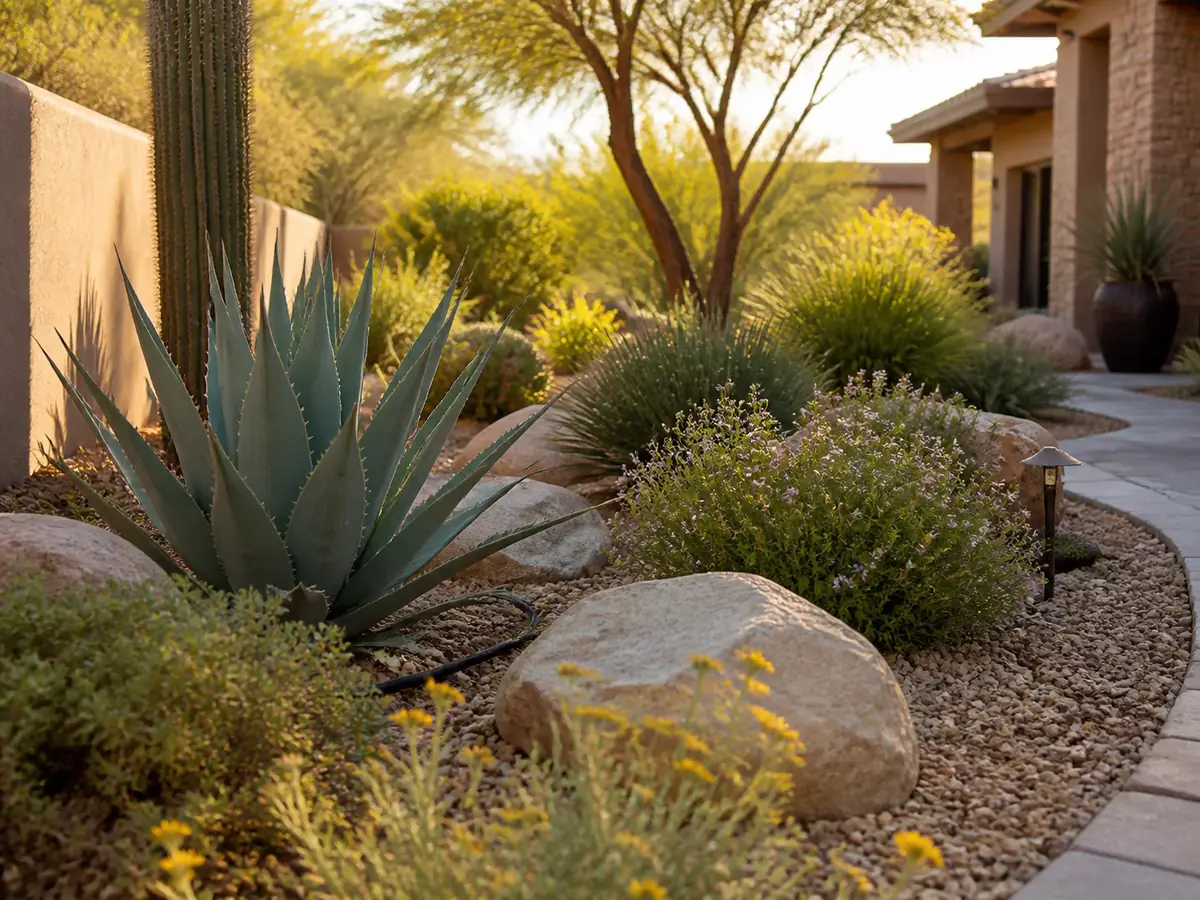
Close concept view of desert planting texture against decorative rock
Texture contrast between planting and ground material.Close range is where a xeriscape is judged: leaf texture against stone is what stops the ground plane reading as empty.Conceptual design demonstration — not client work
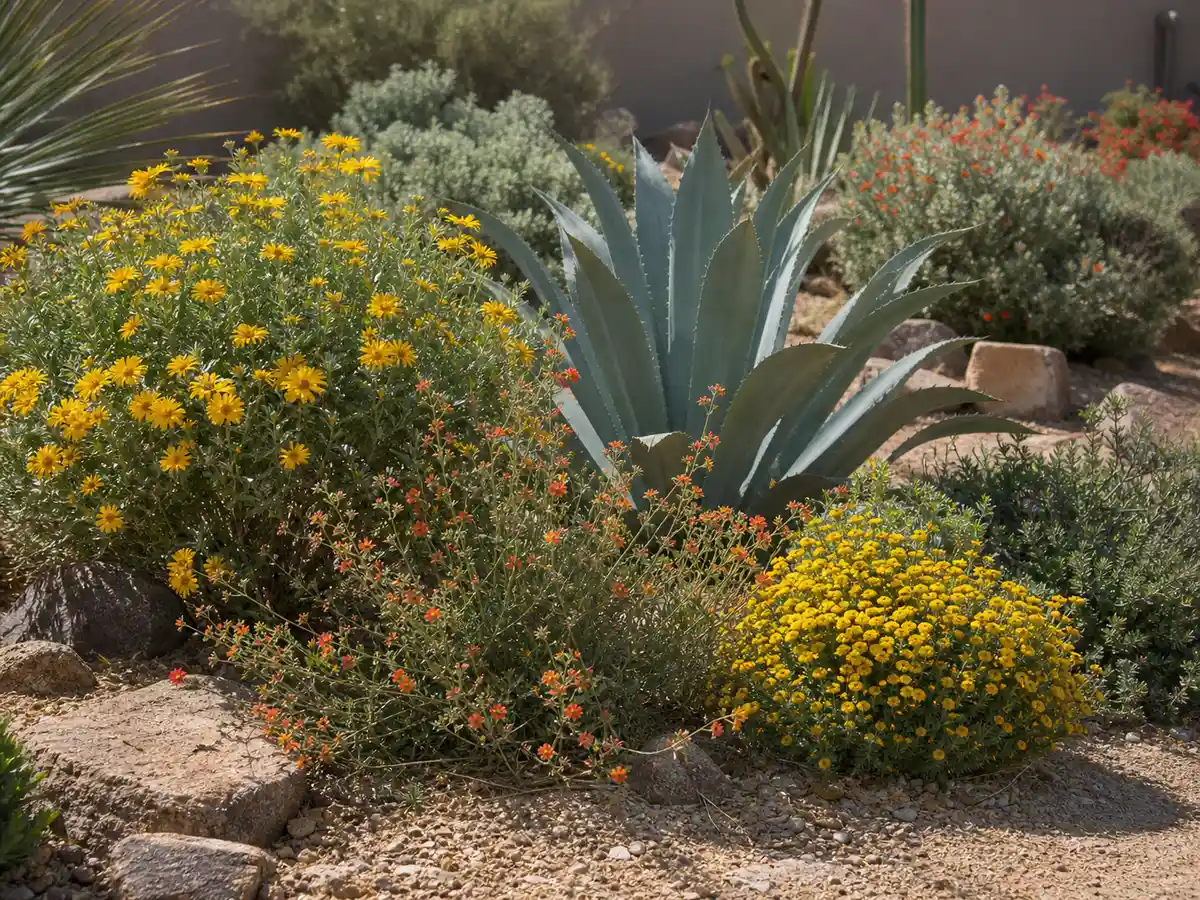
Concept of flowering brittlebush, globe mallow, and desert marigold around agave
A planting direction that adds seasonal color around structural forms.Flowering masses repeat at low height while agave and desert spoon hold the composition when blooms cycle off.Conceptual design demonstration — not client work

See every concept direction

Questions about desert planting

How are plants chosen?

By matching the plant to the exact spot: how much sun that spot gets, the microclimate created by walls and paving, soil and drainage, how big the plant will actually be at maturity, and how much water it will want once established.

Will the yard have color, or just green and gray?

Desert planting has a great deal of color available — flowering shrubs, accents, and seasonal bloom — alongside the structural forms of agave and cactus. Color through the year is a design decision made at selection time.

How long do new plants need extra water?

Longer than most people expect, and it varies by plant size, planting season, and soil. The establishment period is when a new desert landscape is most often lost, so the watering schedule for it is set out explicitly at the walkthrough.

The rest of the work this belongs to

Plan Your Complete Yard Conversion

Complete residential xeriscape design and installation for Scottsdale homes.

Demo form — try the complete experience. Nothing you enter is sent, saved, or scheduled.

Request a Design Consultation