Skip to content

Plan Drip Irrigation Around the Plants and Property

Drip irrigation

Planning drip around the planting: zoning plants with similar water needs together, covering the root zone, placing emitters for how the plant will grow, watering through establishment, and adjusting as the roots spread.

What keeps the planting alive. Presented as system design, not as a product install.

Zone by what the plants need

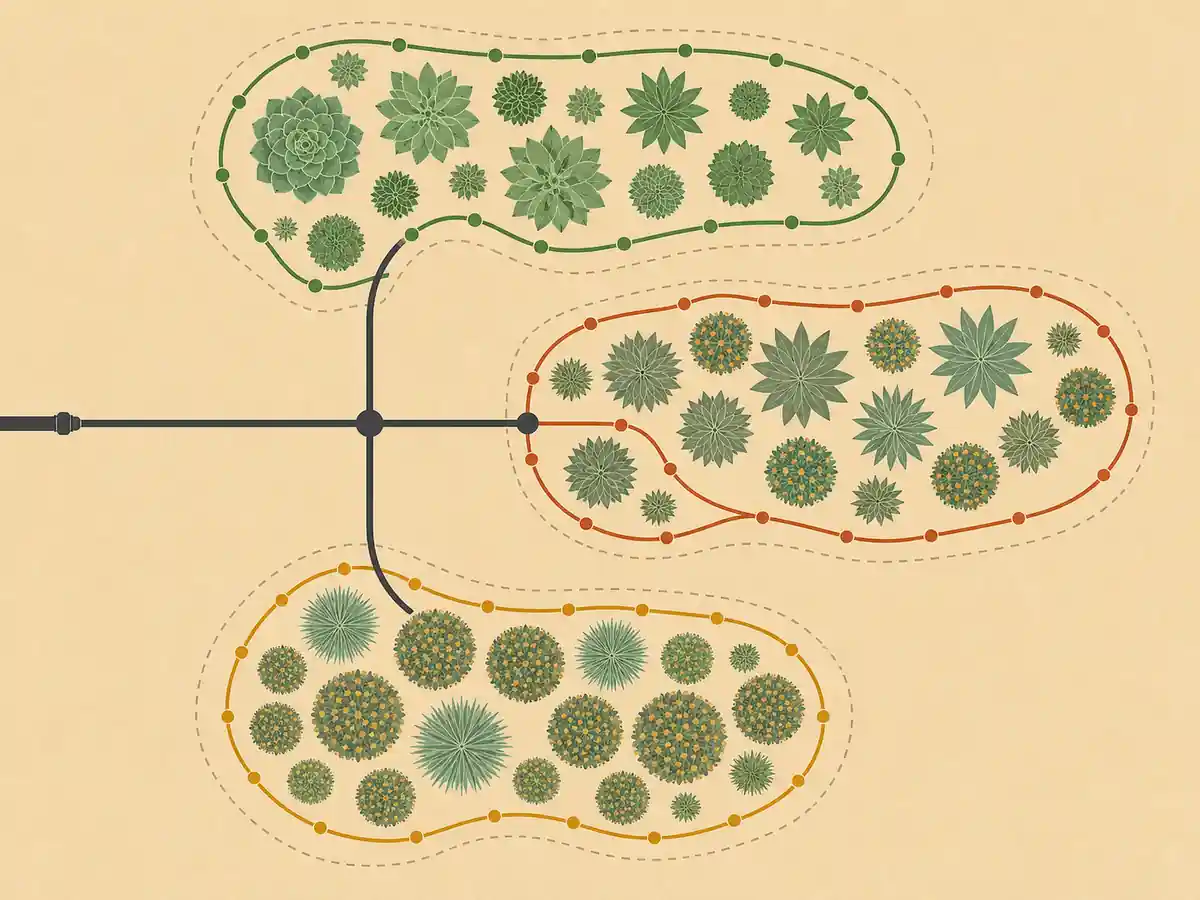
Plants with similar water needs share a zone, so each zone can run on its own schedule.

More detail about Zone by what the plants need

Plants with similar water needs share a zone, so each zone can run on its own schedule. Watering a whole yard on one schedule means running it for the thirstiest plant on the property and overwatering everything else.

Zoning is decided with the planting plan, not after it.

Water where the roots are

Coverage is planned around where a plant roots and how far that spreads as it grows.

More detail about Water where the roots are

The point of drip is delivery to the root zone rather than to the air or across the surface. Coverage is planned around where a plant roots and how far that spreads as it grows, which is not the same as putting an emitter beside the stem.

Emitter placement follows the plant

Emitters are placed for how the plant will grow, usually outside the crown rather than against it.

More detail about Emitter placement follows the plant

Emitters are placed for how the plant will grow, usually outside the crown rather than against it. The number and the spacing follow the plant rather than a fixed pattern repeated across the bed.

Establishment runs on a different schedule

A new landscape is watered more often while roots spread, then reduced deliberately as they take hold.

More detail about Establishment runs on a different schedule

A new landscape is watered differently from an established one: more often while roots are spreading, then reduced deliberately as they take hold. That schedule is set out at the walkthrough, along with how to operate the controller.

Drought-tolerant plants are not waterless plants, and establishment is where most of the ones that fail are lost.

The system changes as the planting matures

As roots spread, coverage has to spread with them.

More detail about The system changes as the planting matures

As roots spread, coverage has to spread with them, which usually means moving or adding emitters rather than running the original layout for longer.

A system left exactly as installed is eventually watering a yard that no longer exists.

What can only be answered on site

There is no single correct burial depth to quote, and whether an existing system can be reused depends on an inspection.

More detail about What can only be answered on site

There is no single correct burial depth to quote. It depends on the system, the soil, the planting, and how the yard is used.

Whether an existing system can be reused is the same kind of question: it depends on the condition of the valves, lines and controller, and on whether the existing zoning suits the new planting. Anything promised about either before an inspection is a guess dressed as a specification.

Concept directions

Conceptual design demonstration — not client work. Each one shows a design decision rather than a finished project.

Diagram of a drip irrigation layout showing three planting zones fed from one main line
A diagram of how drip zones are planned around the planting.Plants with similar water needs share a zone, so each zone can be run on its own schedule instead of watering the whole yard to suit its thirstiest plant.Conceptual design demonstration — not client work
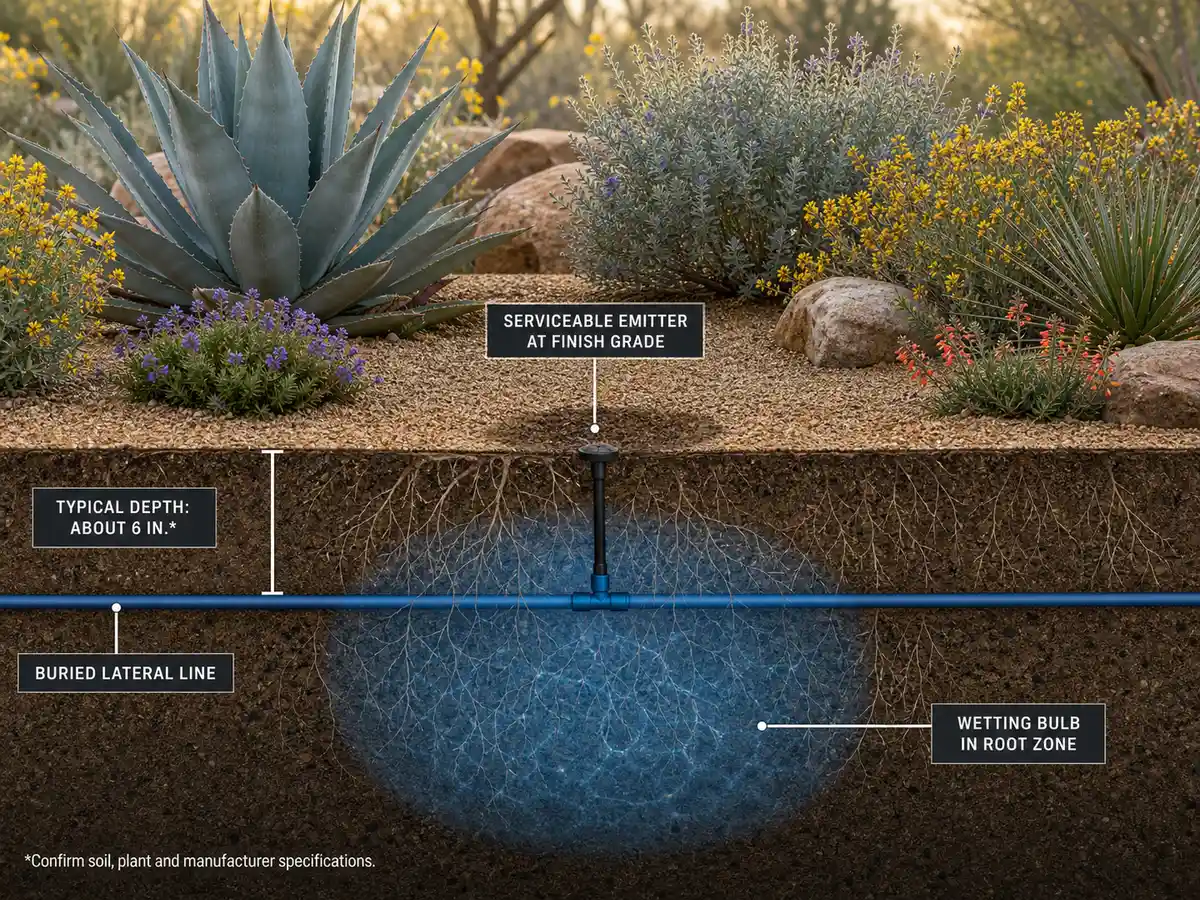
Cutaway concept of a finished desert bed showing a buried irrigation lateral, grade-level emitter, and root-zone wetting bulb
A finished-bed irrigation direction that reveals the concealed system beneath the gravel.The cutaway separates surface finish from system logic: a buried lateral feeds a serviceable emitter at grade, while the wetting bulb shows how water spreads through the root zone.Conceptual design demonstration — not client work
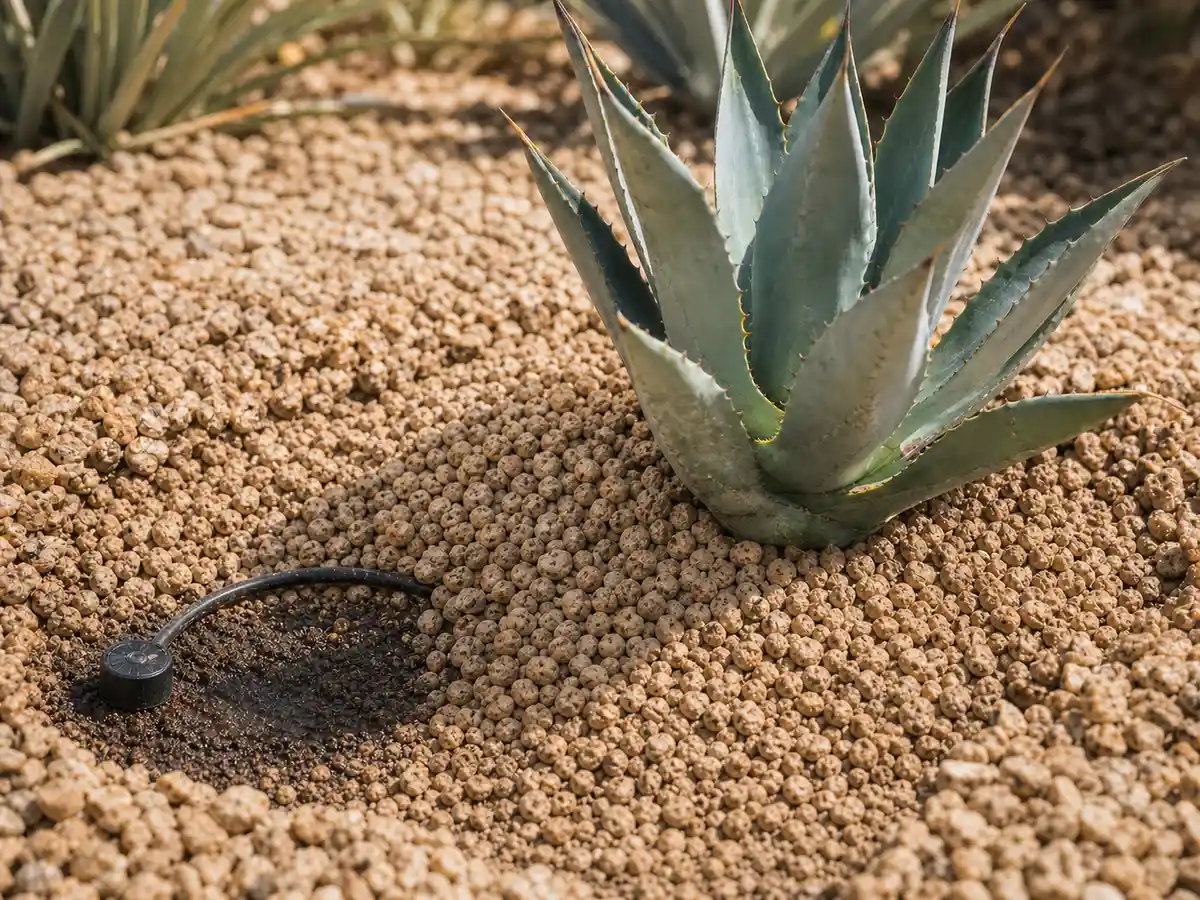
Concept detail of a drip emitter watering soil near a young agave root zone
A root-zone watering direction shown before gravel is returned.The emitter sits outside the crown with a small localized wet area, illustrating targeted delivery without spray.Conceptual design demonstration — not client work

See every concept direction

Questions about drip irrigation

How deep should drip lines be buried?

There is no single correct depth to quote. It depends on the system, the soil, the planting, and how the yard is used. What matters more is that emitters deliver to the root zone, that zones group plants with similar needs, and that coverage expands as the plants grow.

Can an existing irrigation system be reused?

Sometimes in part. Whether existing valves, lines, and controllers are worth keeping is an inspection question — condition, layout, and whether the zoning suits the new planting all decide it.

The rest of the work this belongs to

Plan Your Complete Yard Conversion

Complete residential xeriscape design and installation for Scottsdale homes.

Demo form — try the complete experience. Nothing you enter is sent, saved, or scheduled.

Request a Design Consultation